
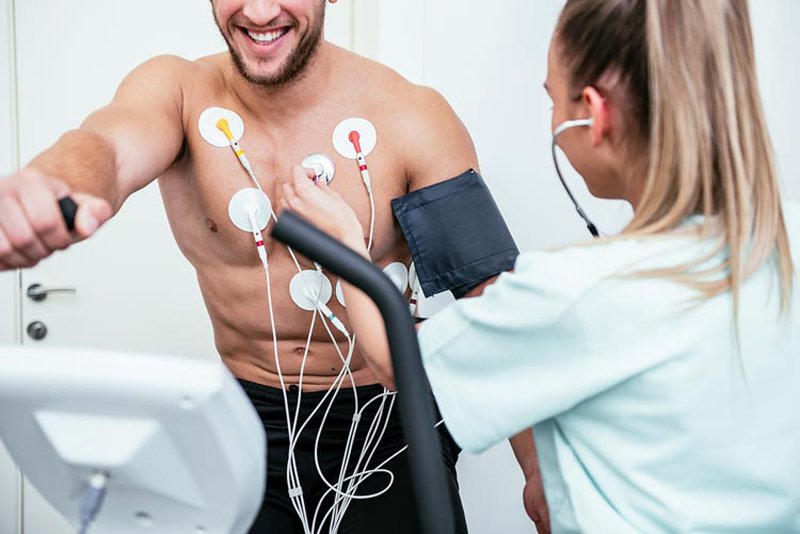
Stress Echocardiography is an advanced non-invasive cardiac test that helps evaluate how well the heart functions under physical or pharmacological stress. It combines echocardiography (ultrasound of the heart) with stress to detect heart problems that may not be visible when the body is at rest.
What Is Stress Echocardiography?
Stress Echocardiography assesses:
- Heart muscle movement
- Blood flow to the heart
- Heart pumping efficiency
Images of the heart are taken before and after stress (exercise or medication-induced). Any abnormal change in heart wall motion may indicate reduced blood supply due to blocked coronary arteries.
Types of Stress Echocardiography
- Exercise Stress Echo – Stress is induced by walking on a treadmill
- Pharmacological Stress Echo – Medication is used to simulate exercise when physical activity is not possible
When Is Stress Echocardiography Recommended?
Stress Echocardiography is advised in the following situations:
1. Suspected Coronary Artery Disease
- Chest pain or chest discomfort
- Breathlessness on exertion
- Abnormal TMT or ECG results
2. Inconclusive or Abnormal Treadmill Test
When TMT results are unclear or borderline, Stress Echo provides more detailed information about heart function.
3. Evaluation of Known Heart Disease
- To assess severity of coronary artery disease
- To evaluate effectiveness of treatment or medications
- To check heart function after angioplasty or bypass surgery
4. Patients Unable to Perform TMT
For individuals with:
- Joint problems
- Elderly patients
- Physical disability
Medication-based Stress Echo is a safe alternative.
5. Risk Assessment Before Surgery
Stress Echo is useful for evaluating heart fitness before:
- Major surgeries
- High-risk non-cardiac procedures
6. Assessment of Heart Valve Diseases
It helps evaluate:
- Severity of valve problems
- Heart’s response to stress in valve disorders
7. Preventive Cardiology & High-Risk Individuals
Recommended for people with:
- Diabetes
- Hypertension
- High cholesterol
- Family history of heart disease
- Multiple cardiac risk factors
Procedure of Stress Echocardiography
- Baseline echocardiography images are taken at rest
- Stress is induced through exercise or medication
- Repeat echo images are taken immediately after stress
- Heart function and blood flow are compared
The test usually takes 30–45 minutes.
Benefits of Stress Echocardiography
- Non-invasive and safe
- Highly accurate in detecting coronary artery disease
- No radiation exposure
- Provides detailed heart muscle assessment
- Helps avoid unnecessary invasive procedures
Are There Any Risks?
Stress Echocardiography is generally safe. Rare side effects may include:
- Temporary chest discomfort
- Breathlessness
- Palpitations
The test is always performed under expert medical supervision.
